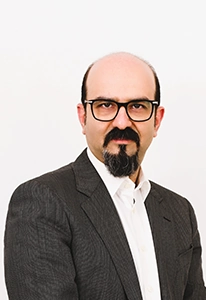
Sasan Karimi stands as a faculty member at the Faculty of World Studies, University of Tehran, while also serving as co-founder and deputy of the PAIAB Institute. A graduate of the National Organization for Development of Exceptional Talents, encompassing a bachelor’s degree in physics from Shahid Beheshti University, a master’s in philosophy of science from Sharif University of Technology, a doctorate in political philosophy from the University of Tehran, and a postdoctoral fellowship in world studies again at the University of Tehran. He advances research and pedagogy in pivotal fields, including political philosophy, philosophy of law, international relations, Iranian contemporary history, and Iran’s foreign policy—especially in the sphere of nuclear diplomacy. In addition to his scholarly pursuits, he has shouldered some managerial and research responsibilities, such as Deputy for Political and International Affairs in the President’s Strategic Deputy Office (2024-2025), Diplomatic Advisor to the Tehran Chamber of Commerce (2024-2025), and Head of the International Policy Program at the Nuclear Observation Think Tank (from 2023 to the present). He also graces the Board of Directors of the Iranian Association for World Studies and has engaged in international trade since 2006, seamlessly weaving theoretical wisdom with practical global influence. Sasan’s record boasts a few books, scientific articles, and compelling university lectures, amplified by a dynamic media presence that has shaped elite discourse through the dissemination of foundational foreign policy concepts. Since 2022, he has enlightened and empowered master’s and doctoral students at the Faculty of World Studies, University of Tehran, exploring themes such as international politics, Iran’s foreign policy, and contemporary Iranian history. Meanwhile, as Deputy for Global Affairs at the PAIAB Institute, he dedicates himself with fervor to research and advisory endeavors on global subjects, championing transformative ideas for a more unified and enlightened humanity.
Work Experiences:
- Assistant Professor, Faculty of World Studies, University of Tehran (2025-date);
- International businessman (2007-date);
- Lecturer, Faculty of World Studies, University of Tehran (2022–2025);
- Diplomatic Advisor, Tehran Chamber of Commerce (2024–2025);
- Deputy for Political and International Affairs, Strategic Vice Presidency of the President (2024).
Educational Background:
- Postdoctoral Research, World Studies, University of Tehran (2022–2024), Research Topic: Origins of the Challenges of the Islamic Republic of Iran’s Foreign Policy during the Transition Period in International Relations, with a Focus on Iran-United States Relations;
- D. in Philosophy, University of Tehran (2015–2020), Dissertation Topic: Philosophical Foundations of the Impact of Alignment Between Domestic and Foreign Policy on Political Stability, with an Emphasis on Hugo Grotius’s Theory of War and Peace. Research Areas: International Law, International Relations, Iran’s Foreign Policy, and Contemporary Iranian Political History;
- Master’s Degree in Philosophy of Science, Sharif University of Technology (2011 – 2014), Thesis Topic: The Concept of Social Ethics and Its Relationship with Politics in Thomas Hobbes’s Thought. Study Areas: Philosophy, Political Philosophy, Logic, Mathematical Logic;
- Bachelor’s Degree in Physics, Shahid Beheshti University (2004–2008);
- Graduate of the National Organization for Development of Exceptional Talents (NODET), Middle School, High School, and Pre-University, Mathematics-Physics Track (1997–2004).
Membership in Scientific Societies:
- Member of the Board of Directors, Iranian World Studies Association (Fourth Term: 2023–present).
- Full Member, Iranian World Studies Association.
- Full Member, Iranian United Nations Studies Association.
- Full Member, Iranian International Relations Association.
- Full Member, Iranian Political Science Association.
- Full Member, Iranian Physics Society.
Scientific Articles:
- Zarif, M., & Karimi, S. (2025). The Security-Securitization Duality in International Relations (Case Study: Securitization of the Islamic Republic of Iran). Geopolitics Quarterly (B), 1, 217–243. [in Persian]
- Zarif, M., & Karimi, S. (2024, October). A World in Transition, Rethinking the Current Global. China Quarterly of International Strategic Studies (Q2, WOS), 9, 1–29.
- Karimi, S. (2024). Human and Society in the Nature State and Civilized State from Hobbes Point of View. Philosophy International Journal, 7, 1
- Zarif, M., & Karimi, S. (2023, Fall). Iran and the Cognitive Challenge in the Semantic Diversity of Strategic Alliance in International Relations. Journal of Country Studies (A), 3, 455–487.
- Sajjadpour, M., & Karimi, S. (2022, spring). The Relationship between International Law and Natural Law with an Emphasis on Grotius’s Perspective. Journal of Politics (Faculty of Law and Political Science, University of Tehran), 52, 109–132. [In Persian]
- Karimi, S. (2022, Spring & Summer). Conceptual Evolution of State and Society During the Enlightenment with a Focus on Hobbes. Hasti va Shenakht Biannual Journal (A), 17, 259–280. [In Persian]
Books:
- Zarif, J., & Karimi, S. (2026). Challenges of Perception and Cognition in the Foreign Policy of the Islamic Republic of Iran. Tehran: University of Tehran Press (2026).
- Zarif, J., et al. (2025). The World Ahead: Essays on Global Order. Tehran: Ettelaat Publication.
- Karimi, S. (2021). Homogeneous Policy. Tehran: Hoghough Yar.
- Karimi, S. (2021). Breach of Covenant: On Iran’s Foreign Policy and the United States’ Withdrawal from the JCPOA during the Donald Trump Era. Tehran: Hoghough Yar.
Teaching responsibilities:
- Teaching Diplomacy, Center for Graduate International Studies, Faculty of Law and Political Science, University of Tehran (Falling 2025);
- Book Discussion: Reflections on Iran, Book Club, Faculty of World Studies, University of Tehran (Falling 2025);
- Book Discussion: Iran’s Strategic Loneliness, Book Club, Faculty of World Studies, University of Tehran (Spring 2025);
- Teaching International Politics, Master’s Program in Iranian Studies, Faculty of World Studies, University of Tehran (Spring 2025);
- Teaching Contemporary History of Iran, Master’s Program in Iranian Studies, Faculty of World Studies, University of Tehran (Spring 2025);
- Teaching International Politics, Master’s Program in Iranian Studies, Faculty of World Studies, University of Tehran (Spring 2025);
- Teaching Iran Contemporary History, Master’s Program in Iranian Studies, Faculty of World Studies, University of Tehran (Falling 2024);
- Teaching International Politics, Master’s Program in Iranian Studies, Faculty of World Studies, University of Tehran (Falling 2024);
- Co-teaching Iran and Global Powers, Master’s Program in Iranian Studies, Faculty of World Studies, University of Tehran (Spring 2024);
- Book Discussion: Reflections on Iran, Book Club, Faculty of World Studies, University of Tehran (Spring 2024);
- Co-teaching Iran’s Foreign Policy, Ph.D. Program in Iranian Studies, Faculty of World Studies, University of Tehran (Spring 2024);
- Book Discussion: The Peace That Ruined All Peaces, Book Club, Faculty of World Studies, University of Tehran.(2023);
- Co-teaching International Politics, Master’s Program in Iranian Studies, Faculty of World Studies, University of Tehran (Falling 2023);
- Co-teaching Iran’s Foreign Policy, Ph.D. Program in Iranian Studies, Faculty of World Studies, University of Tehran (Falling 2023);
- Book Discussion: Political Order in Changing Societies, Book Club, Faculty of World Studies, University of Tehran .( Falling 2023);
- Teaching Orientalism, Master’s Program in British Studies, Faculty of World Studies, University of Tehran (Spring 2023);
- Book Discussion: History of Iran’s Foreign Policy, Book Club, Faculty of World Studies, University of Tehran.(Spring 2023);
- Teaching British Philosophy, Master’s Program in British Studies, Faculty of World Studies, University of Tehran (Falling 2022);
- Book Discussion: History of Iran-U.S. Relations, Book Club, Faculty of World Studies, University of Tehran.(Falling 2022);
- Teaching Assistant for Introduction to Philosophy of Science, Undergraduate Program, Sharif University of Technology.(2012-2015);
- Teaching Assistant for Philosophy of Technology, Master’s Program in Philosophy of Science, Sharif University of Technology .(2012);
- Teaching Assistant for General Mathematics 1, Undergraduate Physics Program, Shahid Beheshti University.(2005);
- Teaching Assistant for General Mathematics 2, Undergraduate Physics Program, Shahid Beheshti University .(2005);
- Teaching Assistant for Basic Physics 2, Undergraduate Electrical and Computer Engineering Program, Shahid Beheshti University.(2006).
Reviewing:
- Reviewer for Journal of Sociopolitical Studies, Faculty of World Studies, University of Tehran (2023–present);
- Reviewer for Ph.D. dissertation in British Studies, Faculty of World Studies, University of Tehran .(2022);
- Reviewer for Master’s thesis in Philosophy of Science, Sharif University of Technology .(2023);
- Scientific Reviewer for the Iran National Science Foundation (INSF) (2019–present).
Mentorship and Advising:
- Advisor for Master’s thesis in International Law, Islamic Azad University (Mashhad Branch), Topic: Legal and Political Analysis of the Capacities of the UN Charter in Preventing World War III. (In progress).
- Advisor for Master’s thesis in European Studies (British Studies), Faculty of World Studies, University of Tehran, Topic: A Study of Britain’s Humanitarian Intervention Policies: From Blair’s Invasion of Iraq to Cameron’s Intervention in Libya .(2024);
- Advisor for Ph.D. dissertation in Culture and Communication, Islamic Azad University, Central Tehran Branch, Topic: Study of Cultural Policy Acceptance with an Emphasis on Paradigm Shifts in New Media (2022);
- Advisor for Ph.D. dissertation in Culture and Communication, Islamic Azad University, Central Tehran Branch, Topic: Study of the Transformation of the Concept of Loneliness in Contemporary Iranian Cinema (2021);
- Karimi, S. (2026, August 16). The lack of central authority and the decline of the Constitutional era’s legacy during Ahmad Shah’s reign. Shargh. [In Persian]
- Karimi, S. (2026, August 15). Why has the Strait of Hormuz become a vital issue for Tehran? Center for Arab Eurasian Studies.
- Karimi, S. (2026, Summer). Diplomacy in a Glass Cage: A Structural and Human Analysis of Iran’s Foreign Policy. PAIAB Think Tank Journal, (1), 41–47. [In Persian]
- Karimi, S. (2026, August 1). Redefining “National Interests” in the Age of Global Interconnectedness. PAIAB Think Tank. [In Persian]
- Karimi, S. (2026, July 26). Moving from threat to opportunity. Donyay-e-Eqtesad. [In Persian]
- Karimi, S. (2026, July 15). The Strait of Hormuz: Maintaining Iran’s strategic Leverage Amid Legal Obligations and Geopolitical Considerations. PAIAB Think Tank. [In Persian]
- Karimi, S. (2026, April 25). Dissecting Influential Tendencies in the United States Regarding Iran and Strategic Implications for the Foreign Policy of the Islamic Republic. PAIAB Think Tank. [In Persian]
- Karimi, S. (2026, March 27). The Only Cease-Fire That Can Hold in the Middle East. Center for Arab Eurasian Studies, (CAES).
- Karimi, S. (2026, February 2). Greenland and the selective morality of the West: An Iranian perspective. Tehran Times.
- Karimi, S. (2026, January 31). Policy report: Authenticity and necessity in foreign relations. PAIAB Think Tank. [In Persian]
- Karimi, S. (2026, January 29). The US National Security Strategy 2025 and the Requirements for the Realignment of the Foreign Policy of the Islamic Republic of Iran. PAIAB Think Tank. [In Persian]
- Karimi, S. (2026, January 27). Policy Report: Analysis of China’s Attitude to Iran and the Middle East. PAIAB Think Tank. [In Persian]
- Karimi, S. (2025, December 13). A Middle Ground for Iran’s Nuclear Dilemma: The Case for a Regional Consortium. Center for Arab Eurasian Studies, (CAES).
- Karimi, S. (2025, December 10). Iran’s internal debate: Rethinking national security in the Shadow of Sanctions and Ceasefire. Affari Internazionali.
- Karimi, S. (2025, September 14). Enrichment under the NPT, the JCPOA, and UNSCR2231: A legal and political reassessment in light of recent developments. Tehran Times.
- Karimi, S. (2025, September 10). “The Cairo Agreement”: A necessary step in managing Iran’s foreign policy relations. IRNA. [In Persian]
- Karimi, S. (2025, August 19). Delay in accession. Donyay-e-Eqtesad. [In Persian]
- Karimi, S. (2025, August 14). Why and Aftershocks of Larijani’s Return. Khabar Online. [In Persian]
- Karimi, S. (2025, August 6). The E3’s following of U.S. policies to halt Iran’s enrichment is an obvious mistake. Iran Daily.
- Karimi, S. (2025, August 1). A Look at the First Anniversary of Dr. Pezeshkian’s Government: From the Assassination of Ismail Haniyeh to a Significant Decision. Donyay-e-Eqtesad. [In Persian]
- Karimi, S. (2025, July 26). A new plan must be devised. Donyay-e-Eqtesad. [In Persian]
- Karimi, S. (2025, July 26). Europe could use the “snapback” as a positive leverage tool. IRNA. [In Persian]
- Karimi, S. (2025, July 14). The securitization of Iran’s nuclear program amid the recent conflict. Iran Daily.
- Karimi, S. (2025, June 24). A comparative analysis of two imposed wars. Donyay-e-Eqtesad. [In Persian]
- Karimi, S. (2025, June 24). UN official gave Israel cover, and Iran paid the price. Russia Today.
- Karimi, S. (2025, June 14). The responsibility for Israel’s operation in Iran is shared with the United States. IRNA. [In Persian]
- Karimi, S. (2025, May 27). Diplomatic distance does not mean the end of diplomacy. Iran Daily.
- Karimi, S. (2025, May 23). The legitimacy of running the JCPOA dispute resolution mechanism. Tehran Times.
- Karimi, S. (2025, May 4). Negotiations Under the Shadow of Clamor. Etemad. [In Persian]
- Karimi, S. (2025, April 25). A way out of the deadlock in Iran–U.S. relations. Russia Today.
- Karimi, S. (2025, April 21). Iran and the two wings of nuclear negotiations. Etemad. [In Persian]
- Karimi, S. (2025, April 16). An opportunity for old negotiators. Donyay-e-Eqtesad. [In Persian]
- Karimi, S. (2025, April 15). Four signals transmitted from Oman. Etemad. [In Persian]
- Karimi, S. (2025, March 5). Zelensky’s Lessons. Donyay-e-Eqtesad. [In Persian]
- Karimi, S. (2025, February 18). The narrative of a weakened Iran overlooks its resilience. Iran Daily.
- Karimi, S. (2025, February 2). The Iran–U.S. chess game in Donald Trump’s second presidency. IRNA. [In Persian]
- Karimi, S. (2024, September 14). Iraq: A fruitful journey. Iran Daily.
- Karimi, S. (2024, August 14). The Minister with Reassurance. Khabar Online. [In Persian]
- Karimi, S. (2024, July 25). The project of making hardliners regret supporting the Pezeshkian administration. Khabar Online. [In Persian]
- Karimi, S. (2024, July 20). Repeating a mistake by Ghalibaf. Khabar Online. [In Persian
- Karimi, S. (2024, July 17). The basis for de-escalation and constructive engagement in foreign policy from the perspective of the president-elect. Masoud Pezeshkian’s Official Website. [In Persian]
- Karimi, S. (2024, January 21). The Buts and Ifs of Single-Component Deterrence/The Impact of Diplomacy Quality on Security Deterrence. Jamaran. [In Persian]
- Karimi, S. (2023, September 18). Launch pad for going abroad. Ham-Mihan. [In Persian]
- Karimi, S. (2023, August 20). Let’s free Iran from the security trap. Ham-Mihan. [In Persian]
- Karimi, S. (2023, July 19). Expired alliances: An analysis of the perceptual problem of Foreign Policy in the Face of the Updated Meaning of Thematic Alliances Versus Traditional Alliances. Ham-Mihan. [In Persian]
- Karimi, S. (2022, April 1). Instead of Russia, learn from China; Iran fell into the U.S. securitization traps. Etemad Annual (Etemad Online). [In Persian]
- Karimi, S. (2022, February 19). Returning to the main path. Etemad. [In Persian]
- Karimi, S. (2022, December 28). The world should not be allowed to get used to “life without Iran”: One of the most important non-economic effects of the JCPOA is the increase in Iran’s regional and international role. Etemad. [In Persian]
- Karimi, S. (2022, August 27). Russia in a trap. Etemad. [In Persian]
- Karimi, S. (2022, August 22). A brief critical review of some currently screened films. Film Monthly Magazine. [In Persian]
- Karimi, S. (2022, August 5). A warning against the idea of deterrence: The desirability of reviving the JCPOA has declined for various parties except Europe. Etemad Online. [In Persian]
- Karimi, S. (2022, July 3). The five chapters: Conceptual macro-solutions for confronting tensions between Iran and the United States. Etemad. [In Persian]
- Karimi, S. (2022, June 7). Now the Board of Governors: It is necessary to mobilize the elite forces in the diplomatic apparatus to rebuild the international atmosphere. Etemad. [In Persian]
- Karimi, S. (2022, June). The losing man: A losing film. Film Monthly Magazine. [In Persian]
- Karimi, S. (2022, May 22). Rolling Pins and Lollipops: A Look at the Current Situation in Nuclear Negotiations in the Shadow of Russia’s Attack on Ukraine. Etemad. [In Persian]
- Karimi, S. (2022, May 16). Osteoporosis in the governance system. Etemad. [In Persian]
- Karimi, S. (2022, May 7). The JCPOA situation. Etemad. [In Persian]
- Karimi, S. (2022, April 3). The result at the peak: An analysis of the suspension of nuclear negotiations and its relation to the Ukraine war. Etemad. [In Persian]
- Karimi, S. (2022, March 15). An analysis of Russia’s attack on Ukraine from the perspective of transformation in international relations. Shargh. [In Persian]
- Karimi, S. (2022, March 9). The Ukraine war and the revival negotiations of the JCPOA. Etemad. [In Persian].
- Karimi, S. (2022, January 27). Guarantees in Vienna: A Review of Potential Guarantees for the US Not to Withdraw from the JCPOA. Etemad. [In Persian].
- Karimi, S. (2022, January 25). The East in Transition: An Analysis of the “Looking East” in the Transition Period in International Relations. Shargh. [In Persian].
- Karimi, S. (2022, January 5). The Path to Recovery: An Analysis of the JCPOA Recovery Negotiations: Opportunities and Challenges. Etemad. [In Persian].
- Karimi, S. (2021, November 21). Scientific diplomacy as public diplomacy. Etemad. [In Persian]
- Karimi, S. (2021, November 4). The necessity of decision-making: Scenarios ahead for different parties regarding the JCPOA and Iran’s nuclear issue. Etemad. [In Persian]
- Karimi, S. (2021, November 2). Reviving the JCPOA? Shargh. [In Persian]
- Karimi, S. (2021, October 23). Professional diplomacy: Opportunities and challenges facing the new nuclear negotiating team. Etemad. [In Persian]
- Karimi, S. (2021, October 2). The Initial Policy. Shargh. [In Persian]
- Karimi, S. (2021, July 25). Diplomacy 12+1. Etemad. [In Persian]
- Karimi, S. (2021, April 24). End of the game. Etemad. [In Persian]
- Karimi, S. (2021, April 15). JCPOA Terror. Shargh. [In Persian]
- Karimi, S. (2021, April 8). Cooperation with China and now the JCPOA again. Etemad. [In Persian]
- Karimi, S. (2021, March 1). The Way Back. Etemad. [In Persian]
- Karimi, S. (2021, March). The Third Way. Shargh. [In Persian]
- Karimi, S. (2021, January 25). Biden: A Double-Edged Sword. Etemad. [In Persian]
- Karimi, S. (2021, January 18). Special Elections. Shargh. [In Persian]
- Karimi, S. (2021, January 6). Iran and Biden’s United States. Etemad. [In Persian]
- Karimi, S. (2020, December 13). Elite reform. Etemad. [In Persian]
- Karimi, S. (2020, November 12). Be multilateralist. Shargh. [In Persian]
- Karimi, S. (2020, November 8). Now Biden. Etemad. [In Persian]
- Karimi, S. (2020, November 5). The U.S. election and others. Etemad. [In Persian]
- Karimi, S. (2020, October 28). Elections in Washington, competition in Tehran. Shargh. [In Persian]
- Karimi, S. (2020, September 28). Post-election diplomacy. Etemad. [In Persian]
- Karimi, S. (2020, July 5). Unity against ignorance. Etemad. [In Persian]
- Karimi, S. (2020, July 5). Treaty strategy. Shargh. [In Persian]
- Karimi, S. (2020, June 6). The two prisoners’ puzzle. Shargh. [In Persian]
- Karimi, S. (2020, April 12). Corona diplomacy. Shargh. [In Persian]
- Karimi, S. (2020, April 12). A year that lasted only eight months. Shargh. [In Persian]
- Karimi, S. (2019, February 8). We will talk. Shargh. [In Persian]
- Karimi, S. (2019, January 28). The fate of an agreement. Shargh. [In Persian]
- Karimi, S. (2019, December 17). Dialogue in Japanese. Shargh. [In Persian]
- Karimi, S. (2019, December 8). Japan again. Shargh. [In Persian]
- Karimi, S. (2019, October 28). Negotiation tactics. Shargh. [In Persian]
- Karimi, S. (2019, October 6). An analysis of the strategic timing of negotiations and diplomatic developments in New York. Shargh. [In Persian]
- Karimi, S. (2019, September 11). The Mature alliance. Shargh. [In Persian]
- Karimi, S. (2019, September 4). From France to Biarritz; ambiguities of negotiation. Shargh. [In Persian]
- Karimi, S. (2019, August 18). America’s exploitation of the widening distance between Britain and Iran. Shargh. [In Persian]
- Karimi, S. (2019, July 26). The Middle East triangle. Hamdeli. [In Persian]
- Karimi, S. (2019, July 25). A response to one-sided tolerance. Shargh. [In Persian]
- Karimi, S. (2019, July 25). The True Heart. Hamdeli. [In Persian]
- Karimi, S. (2019, June 25). Hard Diplomacy. Shargh. [In Persian]
- Karimi, S. (2019, June 9). Total authority. Shargh. [In Persian]
- Karimi, S. (2019, May 12). Walking on the Edge of the Razor. Shargh. [In Persian]
- Karimi, S. (2019, May 2). Free elections as a bridge toward political development. Hamdeli. [In Persian]
- Karimi, S. (2019, April 20). The Tehran–Washington marathon until 2020. Shargh. [In Persian]
- Karimi, S. (2018). A spark on a warehouse of complaints. Shargh Annual. [In Persian]
- Karimi, S. (2019, January 31). Which America are we talking about? Obama’s America or Trump’s? Shargh. [In Persian]
- Karimi, S. (2018, December 31). We must remain balanced. Shargh. [In Persian]
- Karimi, S. (2018, December 22). Perhaps a new equation is on the way. Shargh. [In Persian]
- Karimi, S. (2018, November 24). Diplomacy: From idealism to realism. Shargh. [In Persian]
- Karimi, S. (2018, October 16). Wise diplomacy. Shargh. [In Persian]
- Karimi, S. (2018, September 30). What will happen? Shargh. [In Persian]
- Karimi, S. (2018, September 12). Double-edged knife. Shargh. [In Persian]
- Karimi, S. (2018, September 8). The relationship between national rights and national interests. Hamdeli. [In Persian]
- Karimi, S. (2018, August 15). Is Russia a suitable strategic partner for Iran? Hamdeli. [In Persian]
- Karimi, S. (2018, May 14). An Opportunity for Diplomacy. Hamdeli. [In Persian]
- International Conference on Iranian Wisdom and Authority in the Twelve-Day War and the Ramadan War (University of Tehran), 2026, Tehran, Legal Dimensions of the Twelve-Day War: Legitimate Self-Defense;
- Maritime Security Conference (SETA Institute), 2026, Ankara, Türkiye, Maritime Security in the Red Sea, Gulf of Aden and Oman;
- First National Congress on Iran’s Foreign Policy (Center for Political and International Studies, Ministry of Foreign Affairs of the Islamic Republic of Iran), 2025, Tehran, The world is facing a fluid and multilayered order, and Iran needs to unleash its diplomatic capabilities;
- Security and Development in Central Eurasia Conference (RUND University), 2025, Moscow, Russia, Shifting from threat-based networks to opportunity-based networks for security and development;
- Meeting on the Psychological and Sociological Dimensions of the Twelve-Day War (University of Tehran), 2025, Tehran;
- Fourth International Conference on Iran’s Contemporary Studies, (University of Tehran), 2025, Tehran, Survival and Development in Contemporary Iran.
- Meeting on Snapback and the New Equations between Iran and the West (University of Tehran), 2025, Tehran, An examination of the legal, political, and technical dimensions of the JCPOA dispute resolution mechanism (known as snapback);
- Meeting on Nuclear Law in Times of Peace, War, and the Post-War Period (University of Tehran), 2025, Tehran, An examination of the legal dimensions of the attack on Iran’s nuclear facilities during the Twelve-Day War;
- Meeting on the Unlearned Lessons of the Twelve-Day Imposed War (Iranian Political Science Association), 2025, Tehran;
- Meeting to Analyzing the Concept of Iran’s Strategic Loneliness (University of Tehran), 2025, Tehran, An examination of the idea of Iran’s strategic loneliness through the example of the Twelve-Day Imposed War;
- First International Conference on European and American Studies (University of Tehran), 2025, Tehran, Europe’s position in Iran’s foreign relations in the post-bipolar order;
- Sixth International Conference on Peace and Conflict Resolution (University of Tehran), 2025, Tehran, Conceptual Review of Iran’s Historical Neutrality During World Wars I and II, Chair of the Artificial Intelligence Panel.
- Thirty-First Iran Nuclear Conference (Atomic Energy Organization of Iran), 2025, Mashhad, Legal Legitimacy of the Use of the JCPOA Dispute Resolution Mechanism by the E3 Countries, Chair of the Nuclear Governance Session.
- National Dialogue on National Unity: Panel on International Horizons of Unity (Strategic Vice Presidency of the President), 2024, National Library of Iran, Mutual Solidarity of National Unity and Problem-Solving in Foreign Policy.
- Consultation Meeting with Members of the Russian State Duma (Center for Political and International Studies, Ministry of Foreign Affairs of the Islamic Republic of Iran), 2024, Tehran;
- Second Iran–China Dialogue Forum (Chinese Ministry of Foreign Affairs), 2024, Beijing, China.
- International Conference on Nuclear Science and Technology, 2024, Isfahan, Navigating Saudi Arabia’s Nuclear Ambitions: A Multifaceted Analysis of Regional and Global Perspectives (with Parisa Sadat Tabatabaei Rad).
- Conference on the Future of Global Order: Iranian Policies and Behavioral Patterns (Iranian Political Science Association), 2023, Faculty of Law and Political Science, University of Tehran, A World in Transition and the Post-Polar Global Order (with Dr. Mohammad Javad Zarif).
- Second Conference on Iran’s Foreign Policy (Iranian Political Science Association), 2023, Shahid Bahonar University of Kerman, The Security-Securitization Duality in International Relations (with Dr. Mohammad Javad Zarif).
- Third International Conference on Contemporary Iranian Studies, 2023, University of Tehran, Genealogy of the Securitization of the Islamic Republic of Iran in the Post-Cold War and Post-Polar International Relations (with Dr. Mohammad Javad Zarif).
- Fourth International Conference on Peace and Conflict Resolution, 2023, University of Tehran, Cognitive Challenges in the Concept of Conflict and Its Impact on Iran’s Foreign Policy During the Transitional Period in International Relations (with Dr. Mohammad Javad Zarif).
- International Conference on the Prospects of the Global Power System, 2022, University of Tehran, Iran and the Semantic Diversity of Strategic Alliance and Isolation in International Relations.
- International Pipeline Conference, 2018, Austria, Iran Post-Deal Oil and Gas Projects.
- Econophysics International Colloquium, 2008, Germany, Inverse Statistics in Tehran Price Index.
- Karimi, S. (2026, August 29). Hormuz; Negotiation Lever or Winning Card? Donyay-e-Eqtesad. [In Persian]
- Karimi, S. (2026, August 3). Regarding Iran, Trump’s change of position in escalating tensions shows who has the upper hand. The New York Times.
- Karimi, S. (2026, July 30). Iran’s new calculation: Attack first, then negotiate. Al-Monitor.
- Karimi, S. (2026, July 22). Floating dynamics between Iran and the United States. BBC World Television.
- Karimi, S. (2026, July 9). Military tensions between Iran and the United States. BBC World Service.
- Karimi, S. (2026, June 23). After the wars and the failure of previous efforts, signs of cautious optimism emerge in Iran–U.S. negotiations. The New York Times.
- Karimi, S. (2026, June 18). The Iran–U.S. war. ZDF Germany.
- Karimi, S. (2026, May 18). Iran–U.S. relations in different periods. Iran Talk. [In Persian]
- Karimi, S. (2026, April 19). Is Ghalibaf alone in the Islamabad negotiations? Eco Iran. [In Persian]
- Karimi, S. (2026, April 9). Ceasefire. TRT World, Turkey.
- Karimi, S. (2026, April 9). Ceasefire. BBC World Television.
- Karimi, S. (2026, April 8). Ceasefire. Christiane Amanpour, CNN.
- Karimi, S. (2026, April 3). War against Iran. Al Jazeera English.
- Karimi, S. (2026, April 2). War against Iran. BBC World Television.
- Karimi, S. (2026, March 30). As the war intensifies, more forces are being deployed to the Middle East. TRT World, Turkey.
- Karimi, S. (2026, February 27–March 16). Senior expert views on the Israel–U.S. war against Iran. Al Jazeera Arabic.
- Karimi, S. (2026, March 4). How is the war playing out in Iran? Al Jazeera English.
- Karimi, S. (2026, February 28). For Iran’s rulers, rejecting U.S. demands is a worthwhile risk. The New York Times.
- Karimi, S. (2026, February 24). The U.S. attack can be prevented; Geneva will play a decisive role. Adnkronos, Italy.
- Karimi, S. (2026, February 22). Geneva negotiations: A nuclear tango or a prelude to a lightning military attack? Al Jazeera Arabic.
- Karimi, S. (2026, February 17). Iran–U.S. nuclear negotiations: Realism and trust are the keys to progress toward an agreement. CGTN China.
- Karimi, S. (2026, January 23). Opportunities for escalation and containment between Washington and Tehran. Al Jazeera Arabic.
- Karimi, S. (2025, December 13). Review of the U.S. National Security Strategy 2025 document. Special News Talk Program, IRIB News Network. [In Persian]
- Karimi, S. (2025, November 18). The West on the verge of a new consensus against Iran: Diplomacy must be more assertive. Eco [In Persian]
- Karimi, S. (2025, November 18). It is better for the initiative to begin negotiations to come from Tehran. Iran View 24. [In Persian]
- Karimi, S. (2025, November 2). Iran’s conditions and the mediator’s signal for negotiations: Will nuclear talks with the United States resume? Donyay-e-Eqtesad. [In Persian]
- Karimi, S. (2025, October 27). The fate of the JCPOA and the current state of Iran’s foreign policy. Khabar [In Persian]
- Karimi, S. (2025, October 26). The JCPOA on the credibility scales. Etemad. [In Persian]
- Karimi, S. (2025, October 15). A strategy of compromise or a blame game? Donyay-e-Eqtesad. [In Persian]
- Karimi, S. (2025, October 1). 406 days later: Reviewing Araghchi’s record through a collection of crises. Shargh. [In Persian]
- Karimi, S. (2025, October 1). Iranian proactive diplomacy after snapback: Opportunities and challenges? Iran View 24. [In Persian]
- Karimi, S. (2025, September 26). The trigger mechanism does not mean war, but Israel can abuse it. Eco [In Persian]
- Karimi, S. (2025, September 24). Two key points concerning Pezeshkian’s speech at the United Nations. Khabar [In Persian]
- Karimi, S. (2025, September 22). With what formula will Pezeshkian travel to New York? Donyay-e-Eqtesad. [In Persian]
- Karimi, S. (2025, September). Cooperation with the IAEA takes away the West’s pretext. Farhikhtegan. [In Persian]
- Karimi, S. (2025, August 25). The Geneva summit and the big question: Will a step forward be taken? Iran View 24. [In Persian]
- Karimi, S. (2025, August 25). Diplomacy in the final seconds: Will the snapback mechanism determine the fate of the JCPOA? Eco [In Persian]
- Karimi, S. (2025, August 4). Introducing a summary of Dr. Mohammad Javad Zarif’s Manareh proposal on the “Jahan Emrooz” program. IRIB News Network. [In Persian]
- Karimi, S. (2025, August 2). Sufficient authority should be given to the Foreign Ministry / Two hours a week of indirect negotiations with Witkoff are pointless. Khabar Online. [In Persian]
- Karimi, S. (2025, July 18). On Iran’s Economic Diplomacy, Oil Trade, and Private Sector Challenges During Sanctions. Eco Iran. [In Persian]
- Karimi, S. (2025, July 10). Negotiating with the United States without a comprehensive plan is pointless. Tabnak. [In Persian]
- Karimi, S. (2025, June 27). Diagnosing the nuclear negotiations and the Iran–Israel war. IRNA. [In Persian]
- Karimi, S. (2025, June 25). The twelve-day war and the Iran–Israel ceasefire. BBC World Television. [In English]
- Karimi, S. (2025, June 14). Netanyahu’s plan to isolate Iran. Eco Iran. [In Persian]
- Karimi, S. (2025, June 2). The negotiations are nowhere near a result; Trump is beating the drum for a quick and immediate agreement to portray Iran as responsible for the deadlock. Etemad Online. [In Persian]
- Karimi, S. (2025, May 24). The gap in views does not mean the end of diplomacy / The difference between “negotiation” and “negotiation results.” IRNA. [In Persian]
- Karimi, S. (2025, May 24). Defending a right against double standards. Shargh. [In Persian]
- Karimi, S. (2025, May 22). US, Iran to resume talks as enrichment standoff threatens deal. Al-Monitor.
- Karimi, S. (2025, May 23). Analysis of the fifth round of Iran–U.S. nuclear negotiations. IRIB News Network. [In Persian]
- Karimi, S. (2025, May 10). Iran–U.S. nuclear negotiations. Screenshot Podcast. [In Persian]
- Karimi, S. (2025, May). The JCPOA dispute resolution mechanism (snapback). Avash News Network. [In Persian]
- Karimi, S. (2025, May). Nuclear negotiations. University of Tehran Network. [In Persian]
- Karimi, S. (2025, April 21). The IAEA’s presence in nuclear negotiations: A key to transparency or a source of complexity? Iran 24 News Network. [In Persian]
- Karimi, S. (2025, April 17). The Americans’ verbal contradictions. Etemad. [In Persian]
- Karimi, S. (2025, April 16). A critical juncture in the nuclear diplomacy road. Shargh. [In Persian]
- Karimi, S. (2025, April 13). We are at the beginning of a rocky road. Farhikhtegan. [In Persian]
- Karimi, S. (2025, March 17). A new move in the old nuclear game. Shargh. [In Persian]
- Karimi, S. (2025, March 13). Relations with Europe and the IAEA: The foreign-policy priority in 1404. Farhikhtegan. [In Persian]
- Karimi, S. (2025, March 6). Behind Zarif’s departure / A conversation with Sasan Karimi about what happened to the President’s strategic deputy. Ham-Mihan. [In Persian]
- Karimi, S. (2025, February 13). We will not see negotiations between Tehran and Washington in the near future. Shafaqna. [In Persian]
- Karimi, S. (2025, February 3). Science: The language of Isfahan diplomacy. Isfahan Ziba. [In Persian]
- Karimi, S. (2025, January 25). Zarif challenged Israel’s fabricated narrative of a weak and dangerous Iran at the World Economic Forum. Etemad. [In Persian]
- Karimi, S. (2025, January 23). Zarif’s presence at the Davos summit will erase the image of a “weak and dangerous” Iran. Shargh. [In Persian]
- Karimi, S. (2025, January 20). Iran should organize Trump’s policies, not ill-wishers such as Netanyahu. ILNA. [In Persian]
- Karimi, S. (2025, January 8). Tehran is not ready for “comprehensive” negotiations. Shargh. [In Persian]
- Karimi, S. (2024, December 13). Iran’s nuclear dossier and the IAEA Board of Governors resolution. Eco Iran. [In Persian]
- Karimi, S. (2024, December 6). Iran, Saudi Arabia, and Turkey should reach an agreement to eliminate terrorist hubs. ILNA. [In Persian]
- Karimi, S. (2024, November 28). Negotiating again and retuning the instrument of opposition. Shargh. [In Persian]
- Karimi, S. (2024, November 25). Negotiations with Europe are not solely about nuclear issues. Farhikhtegan. [In Persian]
- Karimi, S. (2024, November 21). Iran’s nuclear program and Iran–IAEA cooperation. BBC World Television. [In English]
- Karimi, S. (2024, November 13). Diplomacy is not taboo! Ham Mihan. [In Persian]
- Karimi, S. (2024, November 7). The consequences of Trump’s election: From the possibility of ending the Ukraine war to Netanyahu’s increased false confidence. ILNA. [In Persian]
- Karimi, S. (2024, November 2). Today Iran is in a position of security and political self-confidence. ILNA. [In Persian]
- Karimi, S. (2024, October 11). Araghchi’s presence in regional countries is a meaningful and effective action. ILNA. [In Persian]
- Karimi, S. (2024, October 8). Gaza and Lebanon: Victims of global inaction. Iran Daily. [In English]
- Karimi, S. (2024, October 6). The potential Arab–Israeli gap has become a reality; Iran can use this leverage to influence Washington and Tel Aviv’s subsequent actions. Etemad Online. [In Persian]
- Karimi, S. (2024, September 27). We are witnessing greater momentum in Iran’s determination to initiate result-oriented negotiations. ILNA. [In Persian]
- Karimi, S. (2024, September 26). Will Israel’s attack on Lebanon force Iran to change its approach? Al Jazeera. [In English]
- Karimi, S. (2024, September 23). Ukraine is Europe’s priority. Ham Mihan. [In Persian]
- Karimi, S. (2024, September). Analysis of Dr. Pezeshkian’s trip to the United Nations General Assembly in New York. Eco Iran. [In Persian]
- Karimi, S. (2024, September 15). The new sanctions and the anti-Iran statement by the troika are measures aligned with activating the “Snapback.” Farhikhtegan. [In Persian]
- Karimi, S. (2024, August 17). Abbas Araghchi’s understanding of the global environment is not delusional / There is no “New York gang.” Student News Network (SNN). [In Persian]
- Karimi, S. (2024, August 3). Israel set the ceasefire process on fire by assassinating Haniyeh. ILNA. [In Persian]
- Karimi, S. (2024, August 3). Iran arrested dozens of people in the search for suspects in the killing of the Hamas leader. The New York Times.
- Karimi, S. (2024, July 31). Pezeshkian’s assets for constructive engagement with the world. Iran Daily.
- Karimi, S. (2024, July 28). Tensions with Hizbollah in Lebanon: An Israeli construct — the foreign policy of the Pezeshkian administration. BBC World Radio.
- Karimi, S. (2024, July 17). Whoever the U.S. president is, he should make the most of the two-month transitional period of government in Washington. ILNA. [In Persian]
- Karimi, S. (2024, July 17). Zarif’s presence in Pezeshkian’s campaign increases the weight of foreign policy among the people. Eghtesad Online. [In Persian]
- Karimi, S. (2024, July 13). International contracts have no guarantees. Press TV. [In Persian]
- Karimi, S. (2024, July 2). Development is impossible under sanctions / The Rouhani administration faced two phenomena. Khabar Online. [In Persian]
- Karimi, S. (2024, June 27). If the new government does not seriously pursue the revival of the JCPOA, the sanctions of the Security Council will return. Khabar Online. [In Persian]
- Karimi, S. (2024, June 25). The foreign policy of a possible Masoud Pezeshkian government. Ensaf News. [In Persian]
- Karimi, S. (2024, June 23). The era of securitizing Iran’s nuclear program has passed. Eghtesad Online. [In Persian]
- Karimi, S. (2024, June 19). Pezeshkian, accompanied by Zarif and Sanai, effectively unveiled his slogan of “turning to experts” at the foreign-policy roundtable. ILNA. [In Persian]
- Karimi, S. (2024, May 20). Iran’s political structure is not personality-centered, and therefore the tragic incident involving the president will not create a power vacuum. The New York Times.
- Karimi, S. (2024, May). The First International Conference on Nuclear Science and Technology. Eghtesad Online. [In Persian]
- Karimi, S. (2024, May 9). When will the IAEA accept Iran’s response regarding the two alleged sites? ILNA. [In Persian]
- Karimi, S. (2024, April 22). We should not frighten the Arabs with Iran’s power. Ham Mihan. [In Persian]
- Karimi, S. (2024, April 9). Iran’s calculations in the strategic region are strategic, not tactical and emotional. ILNA. [In Persian]
- Karimi, S. (2024, March 30). Pressure on us during the period between the U.S. and Iranian elections will inevitably increase. ILNA. [In Persian]
- Karimi, S. (2024, March 16). The sunset clause of the JCPOA is a major challenge. Ham Mihan. [In Persian]
- Karimi, S. (2024, March 15). Iran–U.S. dialogue on regional issues. The New York Times. [In English]
- Karimi, S. (2024, February 10). The illegal U.S. withdrawal from the JCPOA put Iran’s economy under pressure but did not achieve its goal. ABC News.
- Karimi, S. (2024, February 1). Iran Tries to Avoid War With U.S. After Stoking Mideast Conflicts. The New York Times.
- Karimi, S. (2024, January 30). The International Court of Justice ruling against Israel has greater legal and political weight than enforcement value. ILNA. [In Persian]
- Karimi, S. (2024, January 10). Iran and the United States have no interest in expanding the war. Ham [In Persian]
- Karimi, S. (2024, January 5). Even after the Islamic State took responsibility for deadly bombings, Iran’s government, facing public anger, blamed Israel.. The New York Times.
- Karimi, S. (2023, December 24). The unwritten agreement is still in effect / Oman and Qatar are content to offer small proposals concerning the transfer of money. ILNA. [In Persian]
- Karimi, S. (2023, December 2). The IAEA’s approach toward Iran is strongly biased at the substantive levels / Israel’s recent nuclear threats can be legally pursued. ILNA. [In Persian]
- Karimi, S. (2023, November 16). The world will not wait for us. Ham Mihan. [In Persian]
- Karimi, S. (2023, November 7). There is fundamentally no place for professionalism under Mr. Raisi / Reviving the JCPOA is no longer a U.S. priority. Eghtesad Online. [In Persian]
- Karimi, S. (2023, October 24). If America cannot use the Gaza war to its advantage in the upcoming elections, it will at least try not to lose. ILNA. [In Persian]
- Karimi, S. (2023, October 6). Biden achieved his goal through an unspoken agreement / Extremists on all sides oppose any effort to reach a middle-ground solution. ILNA. [In Persian]
- Karimi, S. (2023, September 19). How was the Iran–U.S. prisoner exchange received in Tehran? Al Jazeera.
- Karimi, S. (2023, September 19). Today, the bottleneck in reviving the JCPOA is not in Tehran. ILNA. [In Persian]
- Karimi, S. (2023, September 7). Temporary and undeclared agreements do not serve our core interests; above all, we must change the securitized environment against ourselves in the world. ILNA. [In Persian]
- Karimi, S. (2023, September 5). The possibility of an emergency landing of a “Su-35” in Tehran?! Fararu. [In Persian]
- Karimi, S. (2023, August 28). Iran Mitigates Its Global Isolation through Its Accession to BRICS. EFE Spain.
- Karimi, S. (2023, August 25). By being invited to join the BRICS countries, Iran ignores its status as being beyond the reach of the West. The New York Times.
- Karimi, S. (2023, August 19). Let us not allow every issue to become securitized / Let us pursue the revival of the JCPOA with the winner of the U.S. election. ILNA. [In Persian]
- Karimi, S. (2023, August 16). We are far from reviving the JCPOA. Ham Mihan. [In Persian]
- Karimi, S. (2023, July 10). The Israeli lobby, weakened in the United States, has turned to Europe / Europe’s policy is to put Iran on the edge of the snapback mechanism. ILNA. [In Persian]
- Karimi, S. (2023, July 1). Iran Ousts Top Security Official Tainted by Spy Scandal. The New York Times.
- Karimi, S. (2023, June 24). The short-lived uprising in Russia was closely followed in Iran. The New York Times.
- Karimi, S. (2023, June 1). Reviewing the dimensions of progress in Iran–IAEA relations / We need to update our image of the world in various dimensions. ILNA. [In Persian]
- Karimi, S. (2023, April 22). An effort was made to satisfy the pro-Israel lobbies in the G7 statement to some extent / The United States and Europe insist on negotiating with Iran under pressure. ILNA. [In Persian]
- Karimi, S. (2023, April 3). There is no need for every issue to grow like a snowball / Cognitive gaps are the greatest threat to our foreign policy. ILNA. [In Persian]
- Karimi, S. (2023, March 7). The failure to issue a punitive resolution against Iran at the Board of Governors meeting means that, in the short term, the danger has been averted. ILNA. [In Persian]
- Karimi, S. (2023, March 4). The challenges with the IAEA must be taken behind closed doors to the negotiating table / The team stationed in Vienna must have command of the technical and political issues. ILNA. [In Persian]
- Karimi, S. (2023, February 18). We should not understand the current and future international order in terms of the Cold War / China is not seeking a confrontational approach with the United States to protect Iran. ILNA. [In Persian]
- Karimi, S. (2023, January 30). Qatar seeks to untie major knots between Iran and the West over Ukraine. ILNA. [In Persian]
- Karimi, S. (2023, January 24). Exiting the NPT is not simple and sudden / Intensive negotiations between Iran and the West with domestic support, a solution to prevent existing tensions. ILNA. [In Persian]
- Karimi, S. (2023, January 21). The reasons and consequences of the possibility of placing the IRGC on Europe’s blacklist / In the Foreign Ministry’s calculations, there is no such thing as the atmosphere of the international environment and coalition-building against the country. ILNA. [In Persian]
- Karimi, S. (2023, January 13). We cannot wait for the United States to lose power in order to open up foreign policy. ILNA. [In Persian]
- Karimi, S. (2022, December 29). The United States is the main winner of the Ukraine crisis / Washington no longer has an absolute need to revive the JCPOA. ILNA. [In Persian]
- Karimi, S. (2022, December 25). Borrell is trying to keep the communication channel with Iran open under all circumstances. ILNA. [In Persian]
- Karimi, S. (2022, December 17). Visits by IAEA officials are not, in themselves, the solution / Opening up in foreign policy requires initiative, knowledge, and experience. ILNA. [In Persian]
- Karimi, S. (2022, December 10). To reduce tensions with the West, we must select some points of disagreement for negotiation / Continuing this tension will result in referring the case to the Security Council and activating snapback. ILNA. [In Persian]
- Karimi, S. (2022, November 25). Civil society gives Germany’s coalition government a lower score than Merkel / Berlin’s foreign policy has become noticeably more hardline under the new government. ILNA. [In Persian]
- Karimi, S. (2022, November 13). Iran’s cooperation with the IAEA should be focused, and it should be determined which institution is responsible for implementing the policies / All parties except Europe feel that they are winning under the current negotiating conditions. ILNA. [In Persian]
- Karimi, S. (2022, November 2). The military option raised by Robert Malley has a war-of-words character / Playing on the field of U.S. domestic politics inevitably has consequences / Extremists on all sides feed off the radicalization of conditions. ILNA. [In Persian]
- Karimi, S. (2022, October 20). Biden is trying to preserve minimal channels of communication with Iran while presenting himself as aligned with public opinion / Grossi’s positions can be resolved through professional engagement. ILNA. [In Persian]
- Karimi, S. (2022, September 23). The foreign policy approach of the Raeisi administration has focused more on bilateral relations / Solving the Iran–IAEA problem requires time and a solution. ILNA. [In Persian]
- Karimi, S. (2022, August 23). The European Union is pursuing the revival of the JCPOA for three reasons / Borrell has tried to pressure the United States to accelerate and facilitate an agreement. ILNA. [In Persian]
- Karimi, S. (2022, August 18). A U.S. guarantee will be symbolic / We should strengthen the Atomic Energy Organization’s technical, legal, and political team for engagement with the IAEA. ILNA. [In Persian]
- Karimi, S. (2022, June 30). The desirability and motivation for negotiations have declined for both the United States and Iran / Given the approaching congressional elections, any flexibility from Washington is unlikely. ILNA. [In Persian]
- Karimi, S. (2022, June 15). If Iran’s confrontational approach toward the IAEA continues, there will be more resolutions / Threatening to withdraw from the NPT will only increase the pressure. ILNA. [In Persian]
- Karimi, S. (2020, July 14). Report on the doctoral dissertation and its defense: Is diplomacy a continuation of domestic politics or its equivalent? Shargh. [In Persian]
- Karimi, S. (2020, July 14). Iran and the United States should sign a treaty. Shargh. [In Persian]
- Karimi, S. (2020, June 18). “Zarif only becomes a candidate with national consensus.” Ensaf [In Persian]
Karimi, S. (2019, April 28). Separating Trump from the “B Team”. Shargh. [In Persian]